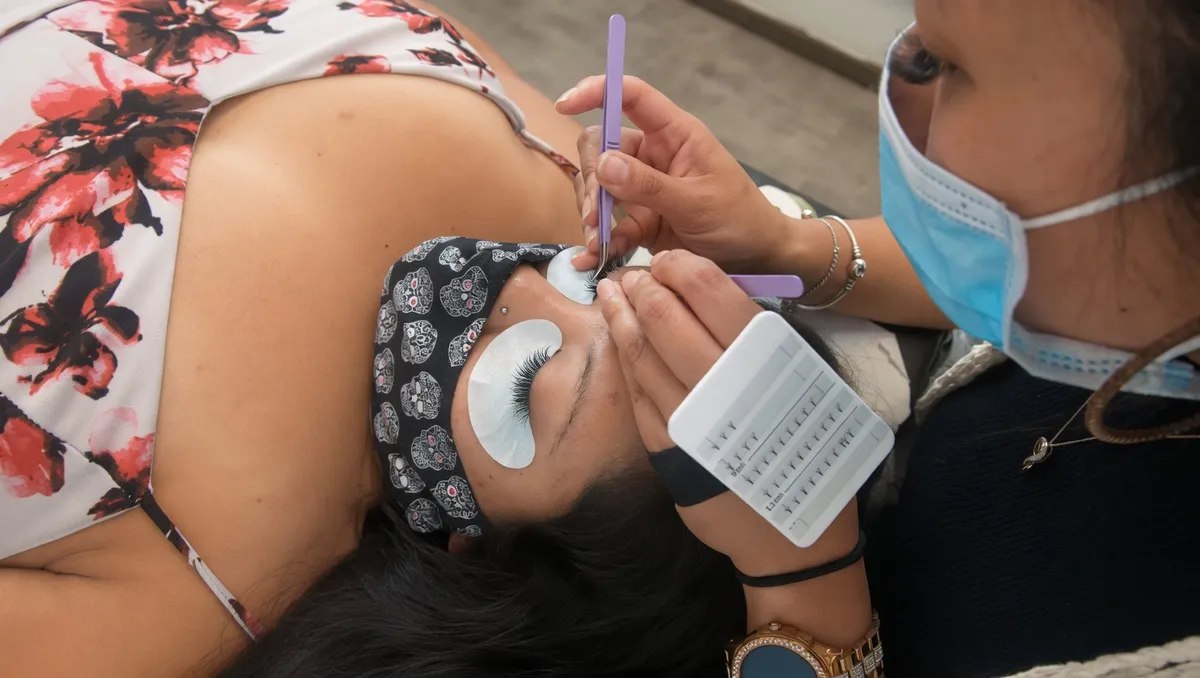
Fills are one of those appointments that sounds simple until you realize how many things can go wrong when you skip steps. I’ve been doing fills for years and still run through the same checklist every single time — not because I have to, but because the few times I rushed it, I paid for it in retention.
Start With a Proper Cleanse
Before touching a single extension, I cleanse. Every time, no exceptions.
I use a microfiber brush with contact solution and primer to clear off any makeup, oil, or residue sitting on the lashes. This is the step most people want to skip when they’re running behind, and it’s also the reason half of retention complaints exist. Extensions need a clean surface to bond to — if there’s anything between the adhesive and the natural lash, you’re already losing retention before you’ve started.
If a client comes in with heavier makeup, I swap to a proper lash cleanser and really work through the lashes with the brush. Takes an extra minute but it’s worth it every time.
Remove the Grown-Out Extensions
Once the lashes are clean, I go through and remove any extension that has grown out more than a millimeter from the lash line.
My rule: if an extension is sitting two to three millimeters from the skin, it comes off. I use the banana peel technique to slide it off cleanly, then place a fresh extension at the correct distance on that natural lash. The reason this matters is comfort — extensions that have migrated too far down the lash can pull, twist, and cause irritation, especially when a client sleeps or rubs their eyes.
It adds a few minutes to the appointment but it’s the difference between a fill that looks fresh and one that just looks full.
Placing the New Extensions
The actual fill is straightforward once the cleanup is done. I work through the lashes that have grown out or lost their extension and place new ones — sitting one millimeter from the skin, no closer.
That one-millimeter gap isn’t optional. Too close to the skin and you get irritation, contact with the eyelid, and retention issues because the glue joint is under constant pressure. I keep a consistent gap across the whole set so everything looks and feels even when it’s done.
Why I Use Pre-Made Fans for Fills
For this fill I’m using pre-made volume fans, which I’ve come to really like for fills specifically.
The distribution is consistent — every fan comes out the same shape, same spread — so the finished set has that even, fluffy look without spending extra time making fans at the tray. For a full set I still prefer making my own, but for fills where I want to move efficiently and match the existing lashes, pre-mades are genuinely useful. I use pre-made volume fans ↗ when I need consistent shape and faster placement.
Sealing the Set Without Collapsing the Fans
When the lashes are done, I finish with a sealant — but I apply it in a specific way that took me a while to figure out.
The mistake I used to make: putting sealant on a regular brush and coating the full extension. That collapses the fans. They go from fluffy to spiky in about ten seconds and there’s no coming back from it.
What actually works: load a thin microfiber brush lightly with sealant and apply it only to the base of the extension — not the fans themselves. Just enough to seal the bond. The fans stay open, the set stays fluffy, and the sealant does its job without wrecking the look.
That’s the full process. Cleanse, remove grown-outs, fill, seal. Done properly it’s a rhythm — each step sets up the next one. Skip the cleanse and retention suffers. Skip removing the grown-outs and the set looks uneven. Do it right and a fill genuinely looks as good as a full set.