- Do You Need a Licence to Do Lash Extensions in Ontario?
- Choose a Course With Live Models
- What Happens on a Two-Day Classic Course
- Why Isolation Is the Skill to Master
- The Questions Students Ask Once They Start
- How Much Practice Before Paying Clients?
- What It Costs to Set Up
- Classic First, Then Volume
- Lash Training in Hamilton
- Frequently Asked Questions
To become a lash tech in Ontario, you do not need a provincial licence. What you need is good training with live models, a certificate, and a workspace that meets public health rules.
I have been lashing for 12 years and training new lash artists since 2017. These are the steps, in the order I give my students:
- Take a course with live models and get your certificate.
- Register your business, and send your public health unit its notice. Registering is the point where that comes up, but the notice is yours to send.
- Get insurance. You need practice insurance, and business insurance too if you work from home.
- Practise until your sets feel easy.
- Market yourself.
- Book your first clients.
Do You Need a Licence to Do Lash Extensions in Ontario?
No. As of 2026, Ontario does not license lash artists. It regulates the place where you work instead. Any business that offers beauty services like lash extensions counts as a personal service setting, and that includes a studio in your home.
Two rules matter most when you are starting out:
- Tell public health before you open. You have to notify your local public health unit at least 14 days before you start taking clients. The same applies when you add a new service or renovate.
- Expect inspections. Public health inspectors check personal service settings for hygiene, cleaning and disinfection. In Hamilton the results are posted online.
The details depend on your health unit, so research yours before you buy anything. Some require a separate sink used only for hand washing. Others have rules about how you clean your tweezers and other tools.
Choose a Course With Live Models
Because there is no licence, your training is what proves you can do the work. These are the things I would compare:
- Live models. A mannequin head teaches you placement. Live models show you the different kinds of natural lashes you will work on. On my two-day course every student works on three models.
- A kit and a certificate. You should leave with the tools to start practising the next day.
- Support after the course. Questions come up once you are lashing on your own. Ask whether your trainer will answer them.
I work with three models over two days for a reason. Every client’s natural lashes are different. Seeing a few types during training means the first unusual set in your own chair is not a surprise.
If you have trouble with your hands or your eyesight, think about that before you sign up. Arthritis or weak muscles in the hands can make a set uncomfortable quickly, and a full set can take two hours or more.
What Happens on a Two-Day Classic Course
Classic lashes are the place to start. One extension goes on one natural lash, and no experience is needed.
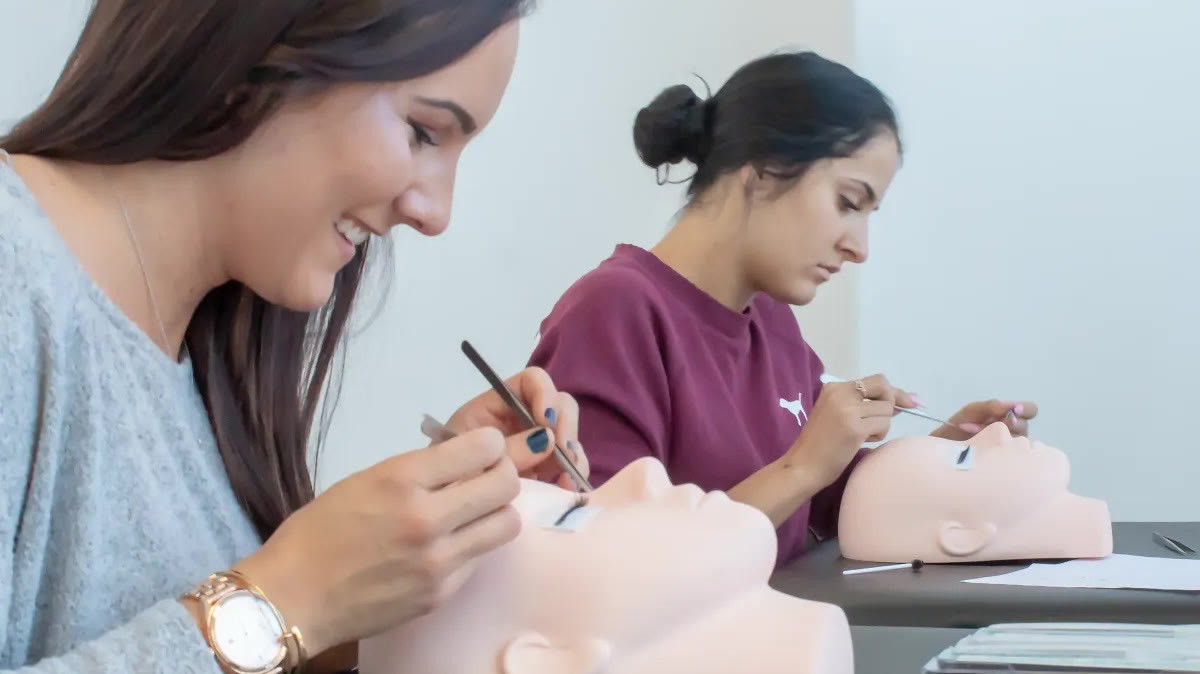
Day one starts with theory from the course manual. We cover the natural lash growth cycle, lash styles, safe application, hygiene and how to market your business. Then you practise on a mannequin head. I watch for three things here: that each extension is placed properly, that you use the right amount of glue, and that your isolation is on point.
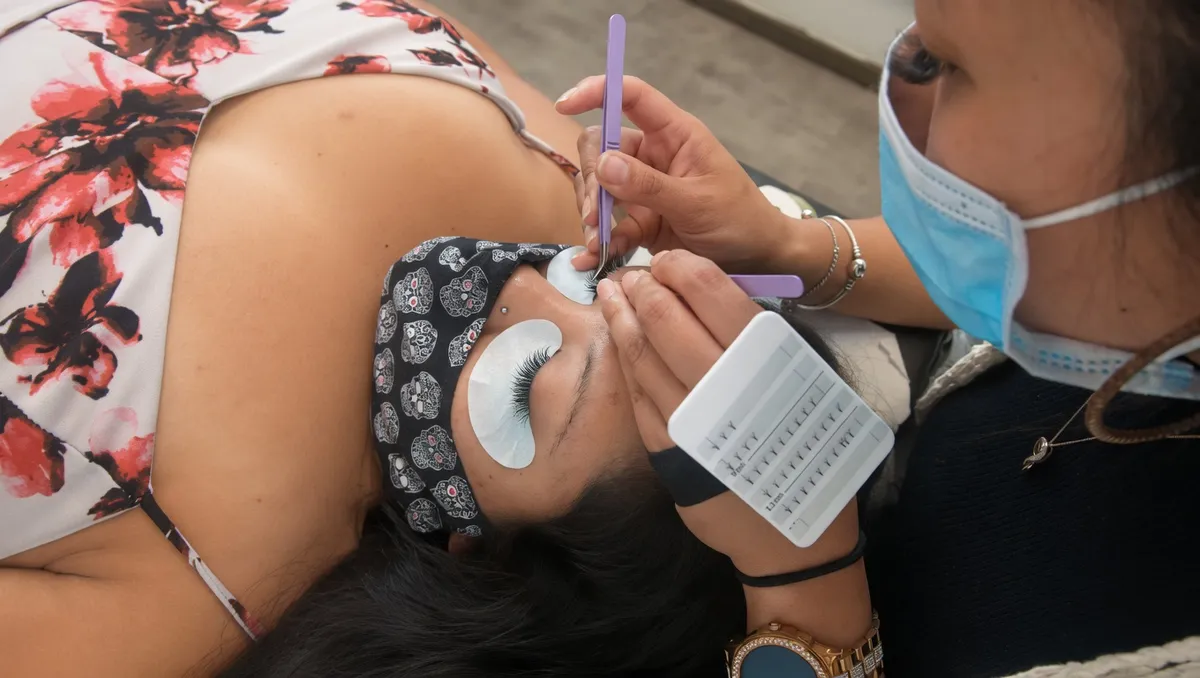
In the afternoon you meet your first model. I show you how to place eye pads and tape properly, then you apply extensions on a real client with me beside you. If you want to get ahead, read how I do lash taping and eye pad placement.
Day two is two more live models. By the end of it you have done three sets, and you finish with your certificate and your kit.

Why Isolation Is the Skill to Master
Isolation is the hardest skill for students to pick up, and the one that matters most. It means separating one natural lash from the others and gluing a single extension to it. An extension glued to two or three lashes pulls on them as they grow at different speeds, and over time it damages them. More on that in are lash extensions bad for your lashes.
Speed comes later. A classic full set takes me about two hours after 12 years. Take your time on every set while you learn, and check your isolation on each lash before you move on.
The Questions Students Ask Once They Start
The best questions come after the course, once you are working on real clients. After one of my weekend courses a student asked whether extensions can go on the bottom of a natural lash. The answer is yes, and it is one of three placements worth knowing:
- On top of the lash. This is the standard placement for most clients.
- Underneath it. Use it on clients with very long, curly lashes. Placed on top, the extension leaves a gap where the lash curls away from it, and that gap costs you retention.
- On the side of it. Use it when a lash curves to the left or right. Glue the extension to the straightest part of the lash so the set still looks straight across the eye.
Questions like this are why ongoing support matters.
How Much Practice Before Paying Clients?
It depends on the person. Some students get it quickly and some take longer. In class you work on three models for classic and two for volume. After that, practise on family and friends until you feel confident in your sets. For some students that is as few as 4 sets. Then start taking paying clients.
What It Costs to Set Up
Beyond your course kit, the big items are few. These are rough 2026 prices in Canadian dollars:
- A lash bed, about $200.
- A lighting kit if your space needs one, about $60 to $100.
- Lash supplies, which vary with what you use.
Lash supplies are where costs creep up. Keep the number of lash styles and lengths small at first. Buy mixed trays with the most common lengths and curls, and add more once you know what your clients ask for.
Classic First, Then Volume
A volume course comes after classic, so take classic first or come with classic experience. The focus moves to making fans and calculating fan weight. A fan that is too heavy is a problem for the same reason an extension more than 3 millimetres longer than the natural lash is: the lash carries too much weight and sheds early. My volume course is also two days, with two live models. Here is how classic, hybrid and volume sets compare.
Lash Training in Hamilton
I teach classic and volume courses in Hamilton, and I travel to students across the Golden Horseshoe. The courses, prices and next dates are on the lash training page.
Frequently Asked Questions
Learn to Lash with MIYO
Two-day classic and volume courses with Lyn. Live models, your kit and a certificate.
See the courses